
Choosing the Right Platform Tennis Paddle: A Buyer’s Guide
You’ve read the rules, you’ve found a court, and you’re ready to play. You reach into your closet, grab your trusty tennis racquet, and… stop right there.
As we discussed in our guide on What is Platform Tennis?, you cannot use a strung racquet in “the cage.” You need a paddle. And unlike tennis racquets, where the differences can be subtle, the wrong paddle can physically hurt your arm or make it impossible to control the ball.
The market is flooded with options from brands like Viking, Wilson, and Master Athletics. For a beginner or intermediate player, the specs can be confusing. “Core density”? “Grit”? “Head size”?
This guide cuts through the noise to help you build the perfect starter kit for the 2026 season.
Key Features to Look For: Weight, Density, and Grip
Before you look at brands, you need to understand the three metrics that actually matter.
1. Weight (The “Maneuverability” Factor)
Platform tennis is a game of reflexes. The ball comes fast, and you are often at the net.
- Light (350g – 365g): Best for beginners and players with tennis elbow. It allows for lightning-fast hands at the net but sacrifices some power on the drive.
- Mid-Weight (370g – 385g): The sweet spot for most intermediate players. Good stability on blocks but still easy to swing.
- Heavy (385g+): Generally for advanced players who can generate their own head speed and want maximum plow-through on the ball.
2. Core Density (The “Soft vs. Hard” Factor)
Paddles are filled with foam. The density of that foam dictates how the ball feels.
- Low Density (Soft): The ball sinks into the paddle face. This provides a “trampoline effect” for more power and absorbs shock, making it arm-friendly. Recommended for beginners.
- High Density (Firm): The ball pops off immediately. This offers maximum control and precision but requires you to generate your own power.
3. Surface Grit
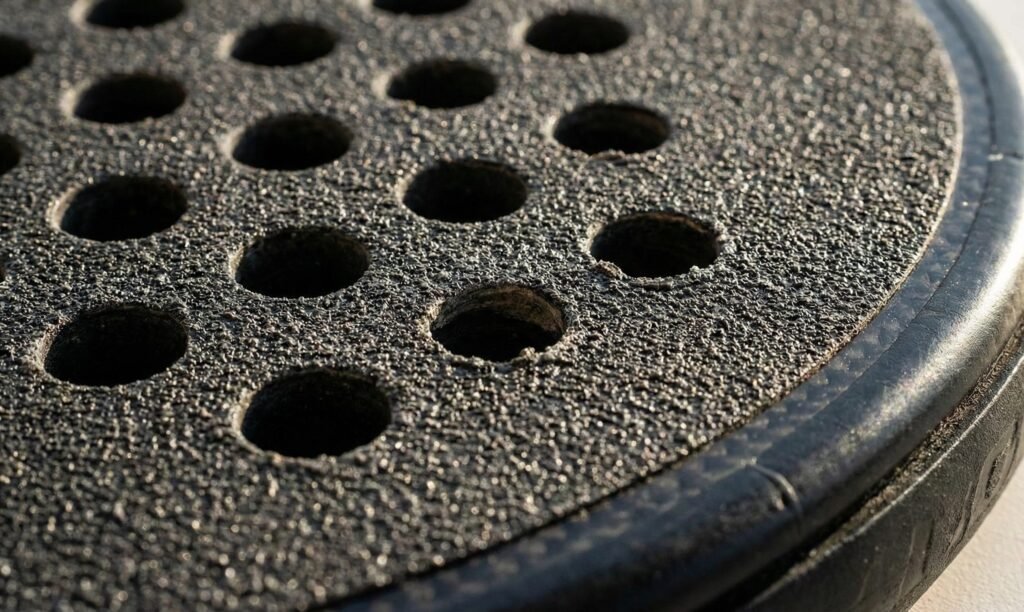
See that sandpaper texture on the face? That is “grit.”
- More Grit: equals more spin. If you are a tennis player who relies on a heavy topspin forehand, look for a paddle marketed as having “Max Grit” or “Extra Spin.”
Top Picks for Beginners (Focus on Control)
For your first paddle, you want something forgiving. You want a large “sweet spot” (the area where the paddle hits the ball cleanly) and a softer core to help with power.
Top Brand A: Viking (The Heritage Choice)
Viking is to platform tennis what Wilson is to tennis—the giant of the industry.
- The Pick: Look for the Viking O-Zone series.
- Why: The O-Zone models typically feature an oversized head shape. This maximizes the sweet spot, meaning you can hit the ball slightly off-center and still get it over the net. It is the ultimate “forgiveness” paddle for new players.
Top Brand B: Wilson (The Transition Choice)
If you play tennis, the handle of a Wilson paddle will feel immediately familiar.
- The Pick: The Wilson Steam or Blade series.
- Why: Wilson paddles are known for their “smart density” foam. They offer a very stable feel that mimics a tennis racquet. If you are transitioning from our weekend tennis programs, a Wilson paddle often makes the switch feel more natural because the grip shape is identical to their performance tennis frames.
Why You Can’t Wear Regular Tennis Shoes
This is the most common mistake new players make.
Do not wear your clay or hard-court tennis shoes.
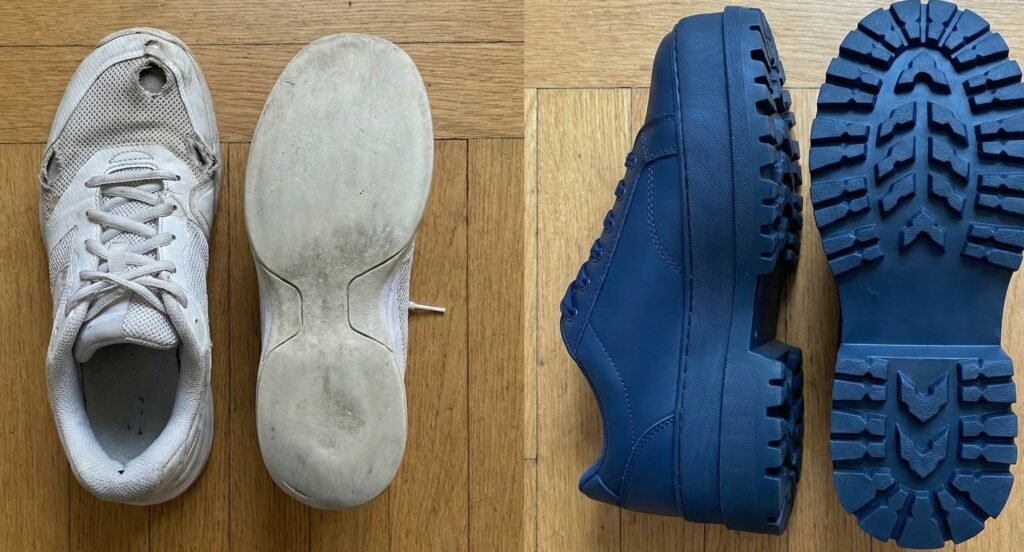
Platform tennis courts are essentially giant sheets of sandpaper. A standard tennis shoe has a soft rubber compound designed to grip smooth surfaces. If you wear them on a platform court:
- You will slip: In winter, the court can be damp or icy. Soft soles will hydroplane.
- You will destroy them: The court grit acts like a cheese grater. You will wear a hole through the toe or sole of a $140 pair of tennis shoes in roughly 3-4 matches.
The Solution: Platform Tennis Specific Shoes
You need shoes designed for the sport (often made by Wilson, K-Swiss, or Prince).
- The Outsole: Look for a high-abrasion rubber compound (often guaranteed for 6 months).
- The Pattern: You don’t want the herringbone pattern of a clay shoe. You want an aggressive, deep-grooved tread that can bite into the grit.
Clothing: Layering for Winter Play
Finally, you need to dress for the “Stop and Go” nature of the game.
- The Rule of 3 Layers:
- Base Layer: Moisture-wicking thermal (skin tight).
- Mid Layer: Fleece or performance quarter-zip (insulation).
- Outer Layer: A vest. Avoid heavy jackets with sleeves. You need your arms free to swing the paddle. A down vest keeps your core warm while leaving your arms mobile.
- Gloves: Essential. Look for a “racquetball glove” or a specific paddle glove. You need leather for grip, but breathable fabric on the back so your hands don’t sweat and freeze.
Conclusion: Building Your Kit
Investing in your own paddle and the right shoes changes the game. It allows you to play with confidence, knowing you won’t slip on the deck or hurt your elbow on a mis-hit.
Ready to gear up? Once you have your paddle and shoes, the next step is learning how to use them. Read our guide on the Rules of Platform Tennis to understand the strategy, or check out our weekend tennis programs if you want to keep your swing in shape during the warmer months.